Making a home more accessible doesn’t always mean committing to a major renovation. Sometimes you only need extra support for a few weeks or months. In other situations, investing in a permanent accessibility solution can make everyday life easier for years to come.
Whether you’re recovering from an injury, adapting to a change in mobility, helping a family member, or making your home easier to navigate long term, understanding the difference between temporary and permanent solutions can help you decide where to start.
When Do Temporary Accessibility Solutions Make Sense?
Temporary solutions can be a good choice when your mobility needs are expected to change.
For example, someone recovering from surgery or an injury may need a wheelchair, hospital bed, lift chair, or other equipment while they recover. Instead of purchasing everything, renting medical equipment can provide the necessary support without a long-term commitment.
Portable accessibility products can also help address barriers around the home. A portable wheelchair ramp, for example, may make it easier to navigate a small step or raised entryway without installing a permanent ramp.
Temporary options may also be useful when:
- Recovering from surgery or an injury
- Hosting a guest with mobility needs
- Testing a solution before making a larger investment
- Living in a home temporarily
- Adjusting to changing mobility needs
The goal is to make everyday activities safer and easier without making changes you may no longer need later.
When Is a Permanent Accessibility Solution Better?
If a mobility challenge is expected to continue long term, permanent home modifications may offer greater convenience and independence.
Entryways are a common place to start. Steps, uneven approaches, and raised thresholds can make getting into and out of the house difficult for someone using a wheelchair, walker, or scooter. A professionally installed wheelchair ramp and handrail can create a safer, more accessible route into the home.
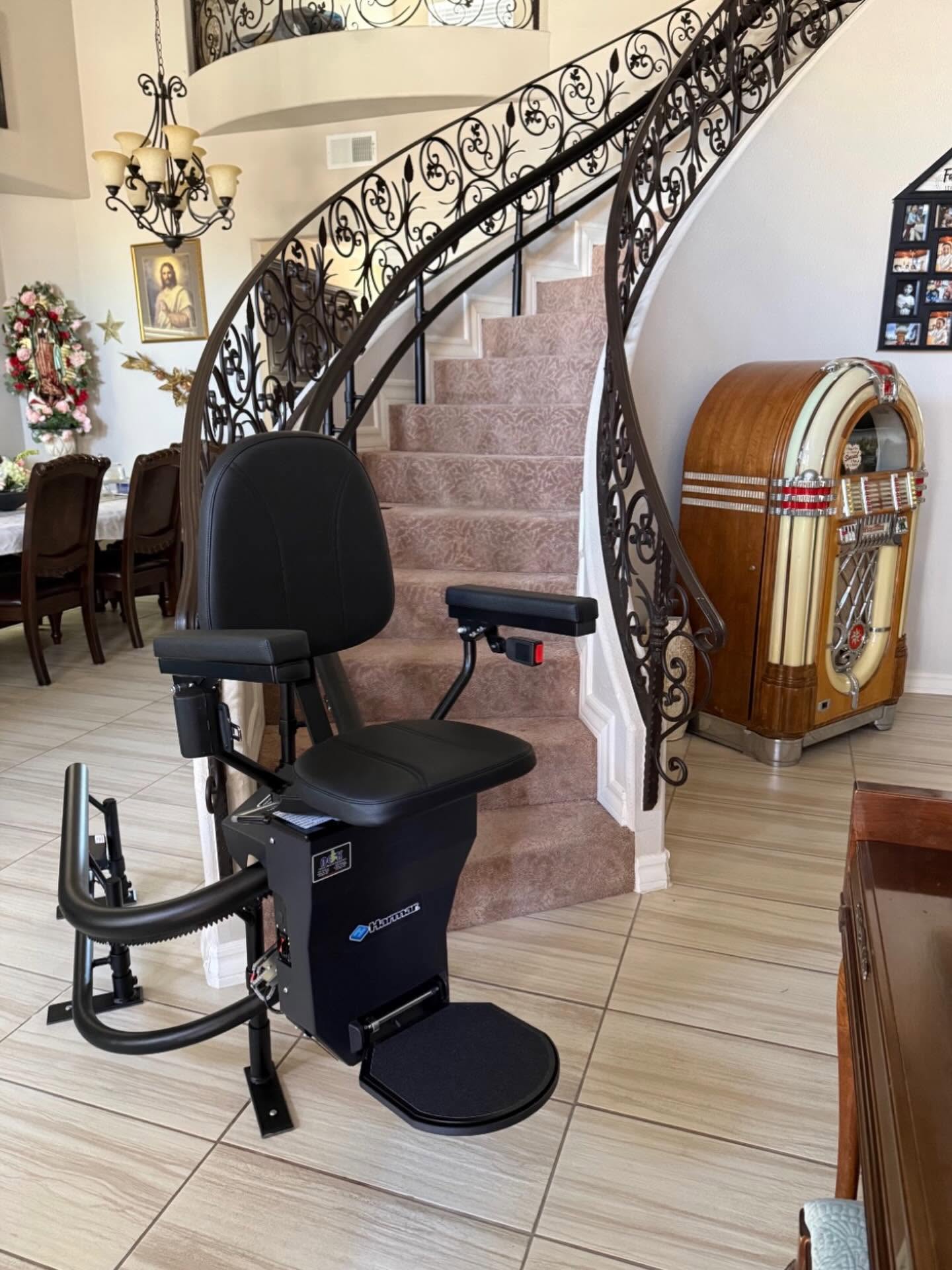
Stairs inside the home may require a different approach. A stairlift can provide access between floors without requiring a major remodel. Straight and curved options are available, and as we discussed in our guide to whether a stair lift can fit in your home, modern systems can accommodate many different staircase layouts.
For wheelchair users, wheelchair platform lifts can provide another option for moving between different levels. Depending on the home and long-term needs, a residential elevator may also be worth considering.
Think About How Your Needs May Change
Choosing between temporary and permanent accessibility solutions isn’t always an either-or decision.
You might rent equipment during recovery while installing a ramp that will remain useful long term. Or you may begin with a portable ramp and later decide that a custom ramp or lift makes more sense.
Consider how often you’ll use the equipment or modification, how long you expect to need it, how much space you have, and whether your mobility needs are likely to change. If you’re comparing entrance options, our guide to choosing between an accessible ramp or lift can also help you understand the factors involved.
Find the Right Accessibility Solution for Your Home
No single accessibility setup works for every person or every home. The right solution should fit your mobility needs, your living space, and how you expect to use it.
BEK Medical offers a variety of home mobility services, including ramps and handrails, stairlifts, wheelchair platform lifts, residential elevators, patient lifts, and other accessibility solutions. We also offer medical equipment rentals for shorter-term needs. Talk with our team to explore your options and find an accessibility solution that fits your home and situation.